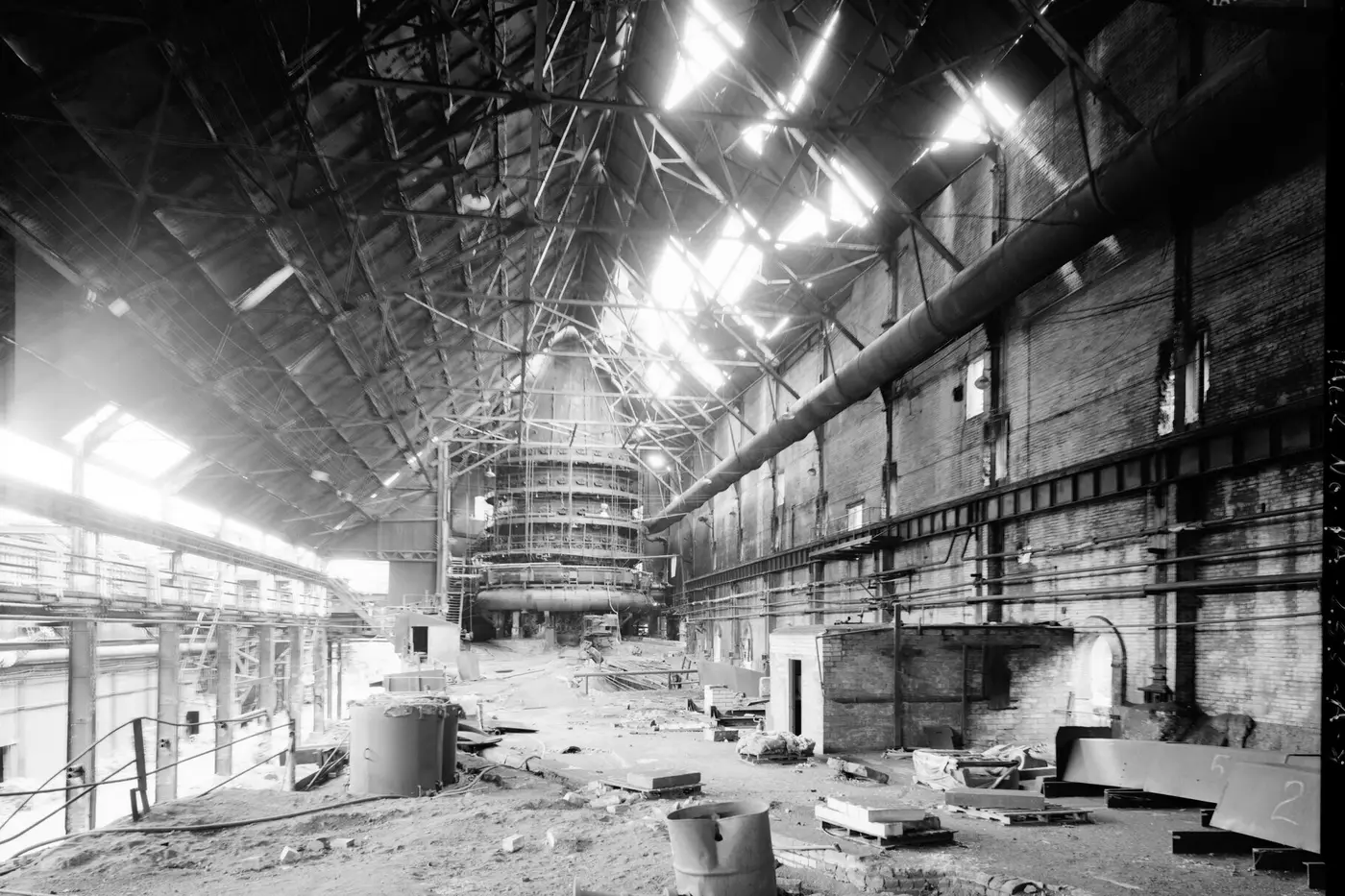
For thirty years the rich world exported its production and imported finished goods. The buildings followed. Factories closed or became warehouses, and the industrial real estate that boomed was the distribution box: big, simple, low in services, built to hold goods rather than make them.
That arrangement is being reversed by policy. The details differ and will keep changing, but the direction is shared. Australia, Britain and the United States now all speak openly about industrial strategy, supply-chain security and domestic capability in energy, defence, critical minerals and advanced manufacturing. Capital is being steered toward making things at home.
Policy with a postcode
Industrial policy has a physical address. A subsidy for battery assembly, a defence contract, a critical-minerals processing plant: each of these lands in a building somewhere, usually in an existing industrial precinct because that is where zoning, labour and transport already are. The demand shows up first as enquiries for sites and existing sheds, long before any new plant is built.
This is the practical expression of the macro argument in The Movement to Real. Capital cycles reward the sectors that went unfunded for years. Domestic production capacity is one of them, and it needs buildings.
The money is real, and it moves
Industrial policy is visible in concrete. In the United States, construction spending on manufacturing facilities rose from about $125 billion in 2022 to about $236 billion in 2024, as the CHIPS and Science Act and clean-energy incentives drew in semiconductor, battery and solar plants. It then eased: $220 billion in 2025, and an annual rate of about $171 billion by August 2026, as some projects completed and some incentives were cut back.
| Market | Instrument | Building signal |
|---|---|---|
| United States | CHIPS and Science Act (2022); clean-energy manufacturing credits, narrowed in 2025 | Manufacturing construction $125bn (2022), $202bn (2023), $236bn (2024), $220bn (2025); about $171bn annual rate (August 2026) |
| Australia | Future Made in Australia Act 2024 (assent 10 December 2024) | A national interest framework for public investment in strategic industries |
| United Kingdom | Modern Industrial Strategy (23 June 2025) | Eight priority sectors, with an emphasis on energy costs and grid connection for industry |
US Census Bureau construction spending (TLMFGCONS, via FRED). Australian and UK instruments as enacted or published; their effect on construction is not yet separately measured.
The American series carries a warning as well as a signal. Policy can move capital quickly, and it can move it back. An owner positioning industrial stock for production should underwrite the physical capability, which lasts, rather than a particular incentive, which may not.
What production asks of a building
A warehouse needs a dry roof, a flat slab, clear height, docks and enough power for lighting, racking and a few chargers. A production building asks much more. Electrical capacity sized for process equipment. Floor slabs that can take point loads and vibration. Compressed air, process water, extraction and drainage. Fire and hazardous-materials compliance for what is stored and made. Often round-the-clock operation, which changes how plant and envelope wear.
Each of those requirements is a line in a capital programme. Each can also be a reason a building cannot be used at all without major works.
The difference between a storage shed and a production building is mostly invisible from the street. It sits in the switchboard, the slab and the services.
A production readiness reading
A production readiness reading asks six questions of each building in an industrial portfolio. What is the incoming electrical supply, and what would increasing it involve? What is the slab designed for, and what condition is it in? Can the roof structure take extraction plant, solar or both? What does the fire strategy permit in terms of process, storage and hazardous materials? Are there process services, compressed air, water, drainage, gas, to build on? And what does the site allow for vehicles, hardstand and expansion?
The answers sort a portfolio into three groups: buildings that can host production with modest works, buildings that can with significant works, and buildings that are distribution boxes and will stay that way. Each group has a different capital strategy and a different place in the market that industrial policy is creating.
The specification gap
Much of the existing industrial stock in all three markets was built for distribution or light industry. Some of it can adapt. Some cannot without works that approach the cost of building new. The gap between what a shed was designed for and what a production occupier now needs is where value is being made and lost.
Power is usually the binding constraint. Increasing a site’s electrical supply can involve network studies, new substations and long lead times on transformers and switchgear, as we discuss in Energy Becomes a Building Function. Floor capacity is the next: a slab designed for racking loads may not take heavy machinery without strengthening. Roof structures may not take the extraction plant or solar arrays that come with the new use.
Reading the shed for production
The question for an owner of industrial stock is which of these buildings could host the occupiers that policy is creating, what it would take, and in what order. That is a building question before it is a leasing one: supply capacity, slab, structure, services, fire strategy, hazardous materials.
Portfolios of sheds are worth reading in two layers, the familiar income and location layer and a physical-capacity layer that asks what each building can become. The second layer is where the next decade of value is likely to be decided. Industrial policy is political and reversible, so this view will be revised with the programmes that drive it.
Sources
Named sources consulted for this paper. Consequential claims link to their source in the text. Reviewed 3 November 2026; next review by 3 November 2027.
- Future Made in Australia, Department of Industry, Science and Resources. Accessed 3 November 2026.
- Future Made in Australia Act 2024 (No. 119, 2024), Federal Register of Legislation. Accessed 3 November 2026.
- The UK’s Modern Industrial Strategy 2025, UK Government. Accessed 3 November 2026.
- CHIPS for America, National Institute of Standards and Technology. Accessed 3 November 2026.
- The One Big Beautiful Bill Act: navigating the new energy landscape, Sidley Austin, July 2025. Accessed 3 November 2026.
- Total construction spending: manufacturing in the United States (TLMFGCONS), US Census Bureau via FRED. Accessed 3 November 2026.
Questions
Can an existing warehouse be converted to manufacturing use?
Sometimes. It depends on electrical supply, floor slab capacity, roof and structural capacity, services and fire compliance for the intended process. Each needs checking against the specific occupier’s requirements before value is assumed.
Why is electrical supply often the main constraint?
Increasing a site’s supply can require network approvals, new substations and equipment with long lead times. Unlike most building works, it is partly outside the owner’s control.