Building intelligence / Capital strategy

Every building is a capital story.
We read them.

Moyne Ross turns building complexity into a clear, costed capital position.

Understand your asset

Any building. Anywhere.

Moyne Ross starts with what can be known about the building. It looks for the evidence, tests what it finds and turns it into one structured view of the asset. Public records, imagery, documents and market context are read together. If the evidence is thin, the gap stays visible and the strategy shows what it means for the capital position.

01 Public signals

From the evidence already available.

We start by looking for the evidence the asset already leaves behind: listings, street and satellite imagery, published records, ownership and occupancy clues, market context and comparable buildings. Each source is checked before it can shape the strategy. A record can support a fact. An image can support an observation. Where the system has to reason from era, type or context, it says so. Uncertainty stays visible, and where it matters, it becomes something to verify or price.

How we know itEvery signal keeps its evidence status
01DocumentedSupported by records or supplied material
02ObservedVisible in the evidence available to the assessment
03InferredReasoned from era, type and contextual signals
02 Three-layer scan

Structure. Services. Space.

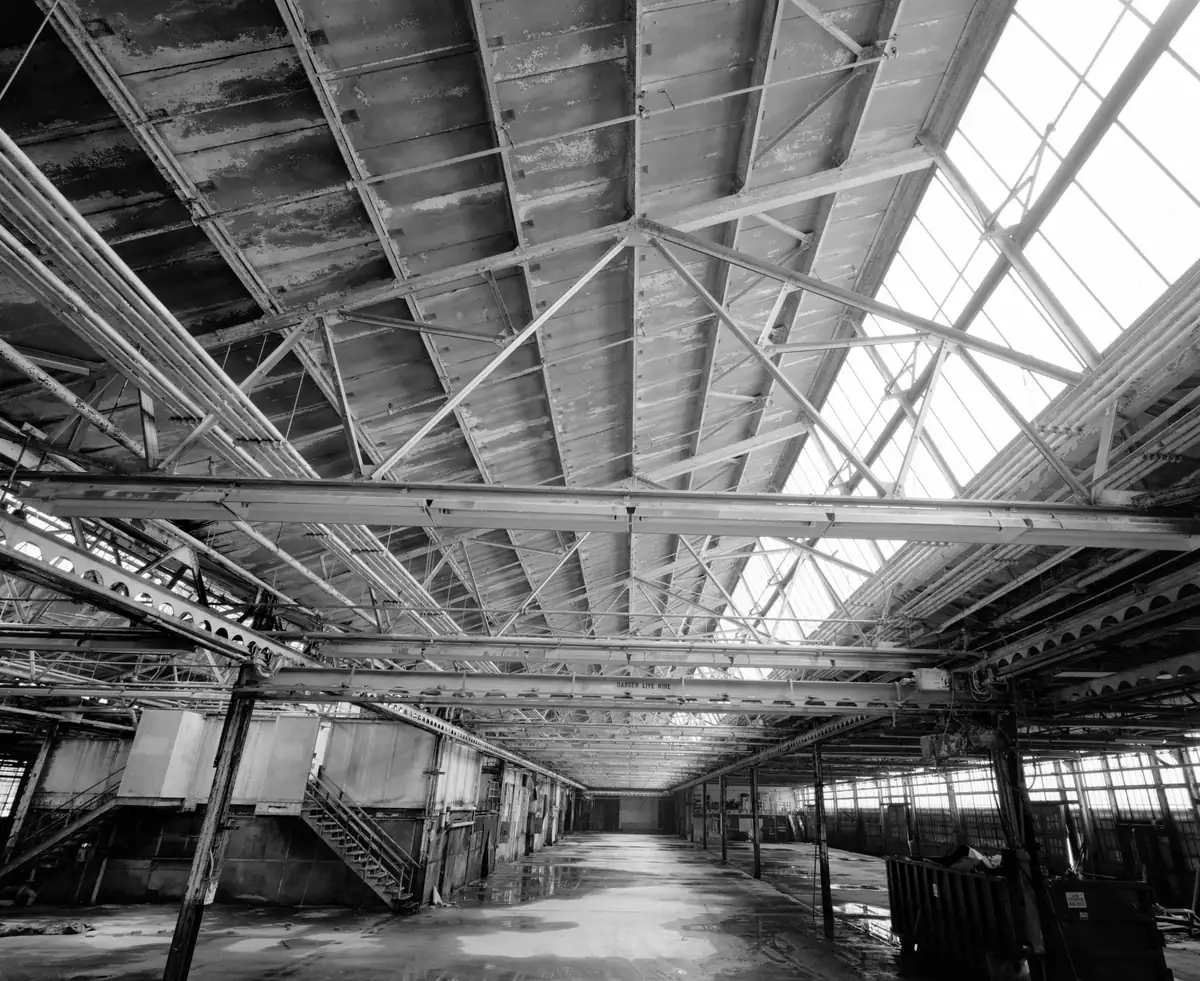
Steel frame and roof structure inside an industrial building
Structure

Substructure, frame, facades, roof. The bones of the building, assessed for remaining service life, condition trajectory, and programme-level capital weight.

Commercial rooftop HVAC units viewed from above
Services

Mechanical, electrical, fire, hydraulic, vertical transport. The systems that keep the building operational, and where the largest capital concentrations tend to land.

Sunlit commercial office interior with glazing and seating
Space

Internal finishes, external works, compliance, environmental. The elements tenants see and regulators enforce. Where deferred decisions compound fastest.

Every element is rated by impact, costed across three horizons and given a confidence grade. The system also checks how building systems affect one another, because one capital decision rarely sits neatly on its own.

See the capital ahead

From assessment to a costed 10-year view.

03 The Capital Register

Every line item. One register.

Every element becomes a row: condition, action, cost, impact, confidence and timing. The assessment sets out the work and how it should be costed. The platform does the arithmetic separately, carries the numbers through the 10-year programme and checks the totals. Every figure can be traced back to its rate, source, quantity, inclusions and exclusions.

Where the evidence is weak, the strategy does not pretend otherwise. Investigation can sit in the register as a real line item with a real cost.

Behind the register →

Every row carries
01ConditionWhat is happening
02ActionWhat should happen next
03Cost basisHow the number was built
04ImpactHow much it matters
05ConfidenceHow strong the evidence is
06TimingWhere it lands in the decade
04 The MR Index

Multiple dimensions. One score.

One capital position · five bands
1Minimal
2Routine
3Mid-cycle
4Elevated
5Major
Where does the building sit?

The MR Index reads the register across six weighted dimensions: severity, certainty, gating, urgency, compliance and concentration. These combine into one band from MR 1, minimal requirements, to MR 5, major intervention. The score is calculated from the register, not guessed by the model. It tells you where the building sits before you read the detail.

A single serious finding can change the whole programme. The scoring model is built to catch that.

Behind the score →

05 The strategy

A capital position you can act on.

At the end, the detail resolves into a capital position. You can see what matters now, what can wait, where costs concentrate and which decisions depend on one another. Bring in private data and the picture sharpens: assumptions fall away, cost ranges tighten and actions become more specific.

Capital positionOne programme / three horizons
0–1Near term
2–5Mid term
6–10Long term
Decide what to do

One building.
More evidence. A wider view.

A capital position is useful when it changes the decision. Start with an independent Capital Strategy. Add what your organisation knows. Connect assets and the same consistent system begins to show how one building sits within a portfolio, a peer set and, over time, a wider market.

01 / Read Independent evidence

Capital Strategy

See the capital ahead.

A consistent 10-year capital view built from the evidence Moyne Ross can establish independently. See likely capital needs, timing, priority, confidence and the overall MR Index before serious capital is committed.

$3,500 per building 5–7 business days
02 / Enrich Your evidence + ours

Enriched Capital Strategy

Sharpen the view.

Bring reports, maintenance history, engineering information, budgets and internal knowledge into the same system. Assumptions can be tested, uncertainty can fall and the capital strategy updates around stronger evidence.

From $7,500 per building Scope reflects the evidence set
Start a conversation
03 / Connect Consistent data at scale

Portfolio Intelligence

Put the asset in context.

Compare assets consistently across your own portfolio. See where capital concentrates, which buildings sit outside the norm and where evidence is weakest. As the reference set grows, the same structure creates the basis for peer and market context.

Portfolio engagements By enquiry
Talk to Moyne Ross

The method stays consistent. The context compounds.

Each stage stands on its own. Each next stage makes the intelligence more valuable.

The practice

A practice built on judgement

Fifteen years between the asset and the balance sheet underpin the Moyne Ross methodology. Moyne Ross does not simply ask AI to write a building report. Different parts of the system do different jobs. Research finds the evidence. The methodology sets the rules. The platform does the maths and scoring. Quality checks look for gaps and contradictions. Professional judgement sits over the whole thing.

About Moyne Ross →

The same building intelligence also reads the homes people live in. Homechecker gives Australian owners and buyers an independent desktop read of what a home may need, what it could cost and what to check in person.

Capital Made Physical

What buildings reveal about capital.

Selected research and observations from the physical and capital reality of buildings.

Enter the archive →

Your building has a capital story. We'll read it for you.

A 10-year strategy. A single score. A clear capital programme.